Blog

  • 14 Years Running: Why Real Estate Is Still America’s Favorite Investmen

    14 Years Running: Why Real Estate Is Still America’s Favorite Investmen

    Quick gut reaction. Which investment do Americans trust more than stocks, gold, savings accounts, and bonds? The answer hasn’t changed in 14 years.

    It’s real estate. And this year, that answer comes with even more conviction behind it. New data shows people aren’t just saying homeownership is a smart move, they’re feeling better about it than they have in years. Let’s dig into why.

    Real Estate Takes the Top Spot – Again

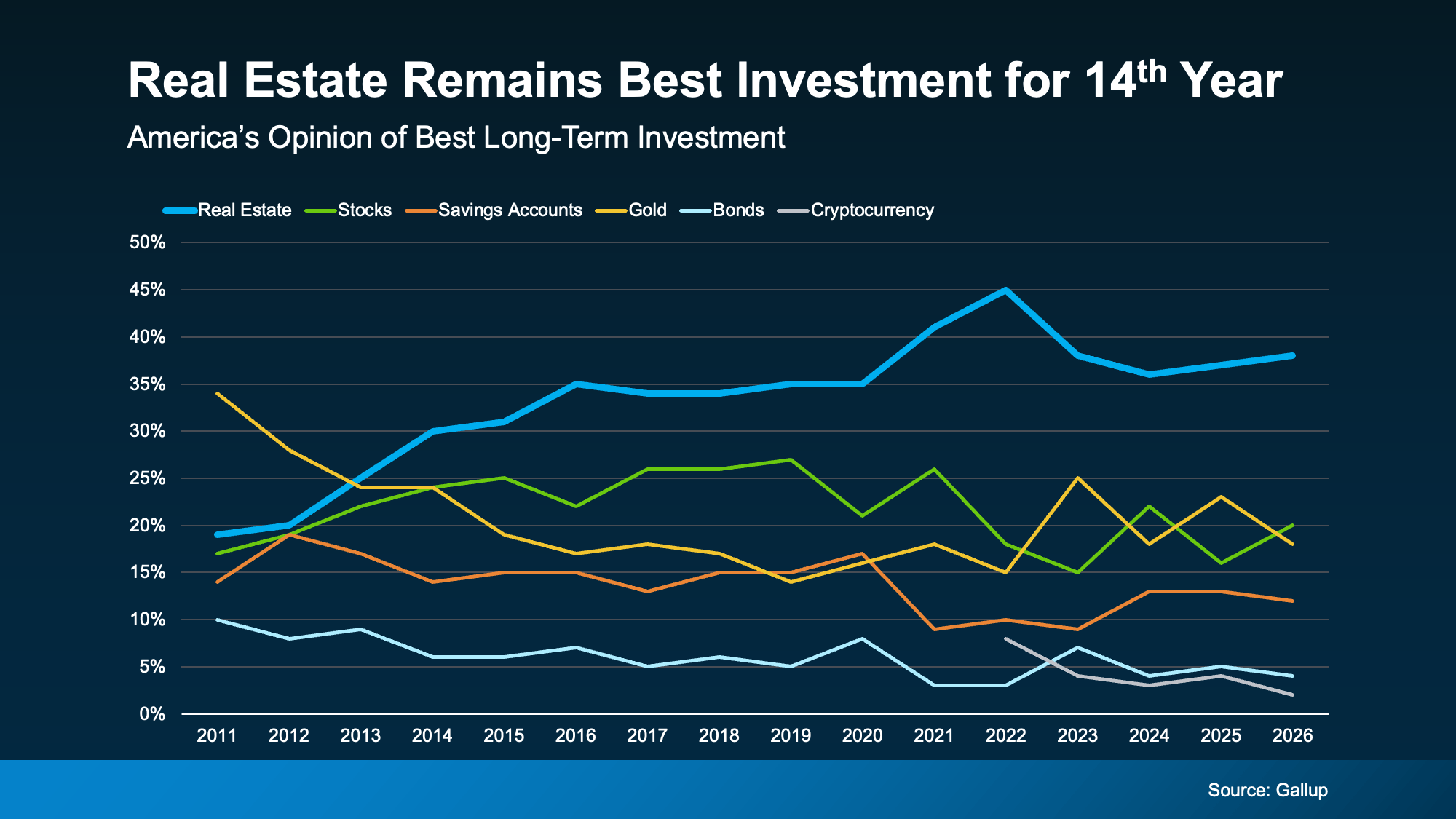
    Every year, Gallup asks Americans to name the best long-term investment. And for the 14th year in a row, real estate came out on top (see graph below):
    a graph of different colored lines

    That’s not a fluke or a hot streak. That’s 14 straight years of beating out stocks, gold, and everything else.

    Think about everything that’s happened in that stretch – rising rates, market swings, election years, you name it. Through all of it, Americans kept picking real estate. That kind of staying power says something about how people view homeownership – and it makes sense. Historically, it’s one of the best ways to build wealth in this country.

    As Michelle Egan, Head of Credit Solutions, Impact Finance at JPMorgan Chase, explains:

    Owning a home has long been considered one of the most reliable ways to build wealth. Beyond providing shelter, a home is a valuable asset that can appreciate over time, build equity, and serve as a financial resource for generations.”

    Now, you may have seen chatter online saying home prices are falling and wondered if that changes the math. It really shouldn’t. Nationally, home prices are still rising – just at a slower pace than a few years ago.

    Yes, some local markets are seeing slight dips, but those dips are small compared to how much home values have grown over the past 5 years. Generally speaking, home prices almost always rise. As long as you plan to live there for a good length of time, you should still have the chance to build equity.

    More People Say Buying Beats Renting

    And while it’s true homeownership has been seen as a worthwhile pursuit for years now, something interesting is happening. It may actually be gaining a bit more popularity again.

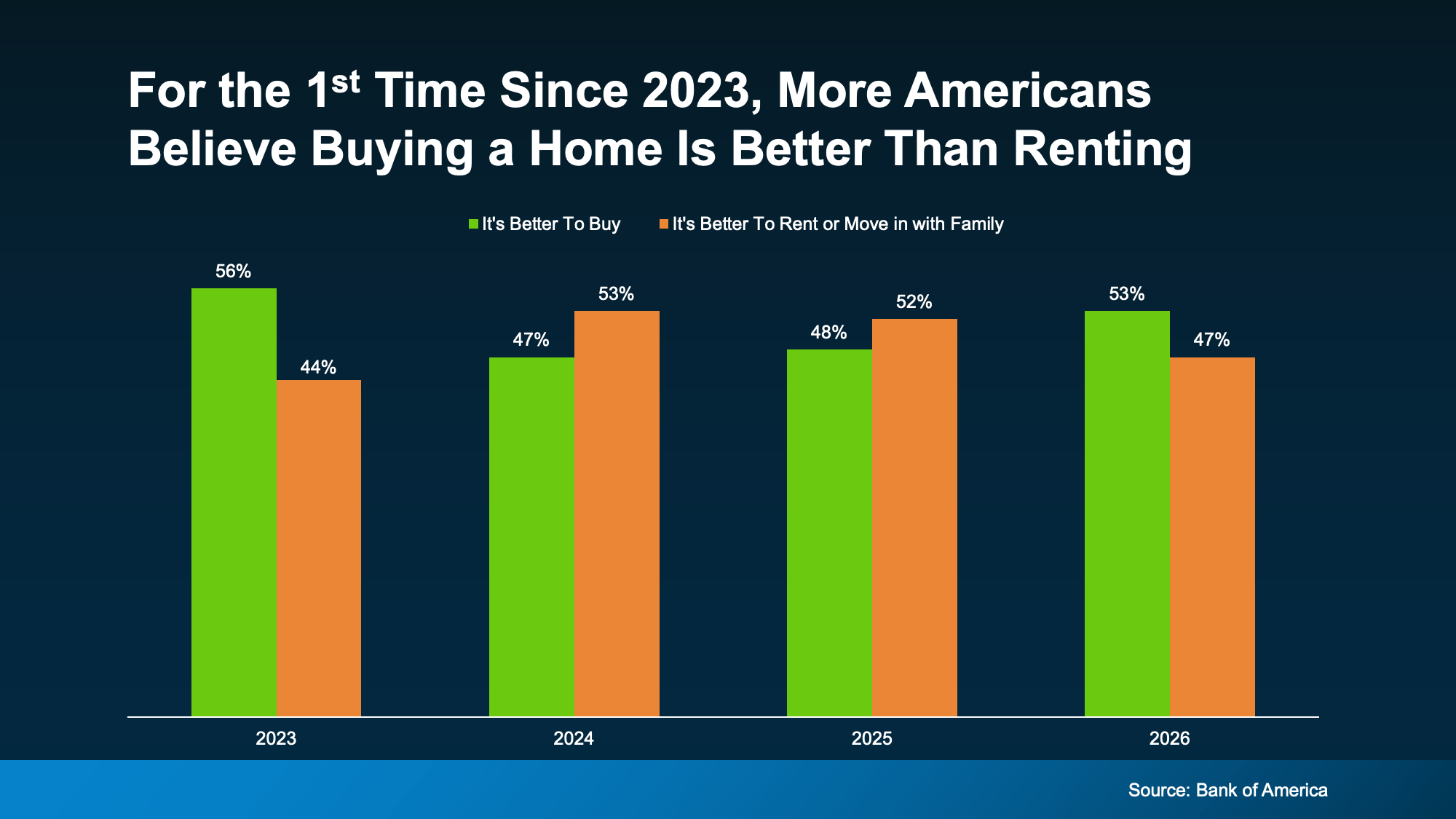
    According to Bank of America‘s latest Homebuyer Insights Report, 53% of people now say it’s better to buy a home than to rent or move in with family. That’s the first time buying has taken the lead since 2023 (see graph below):
    a graph of a number of green and orange bars

    In that same report, here are a few other signals that confidence in homeownership is on the rise:

    • 90% of people say a home is a valuable investment, up from 79% just last year.
    • And 94% say owning a home provides stability, up from 83% the year prior.

    Those are relatively big jumps in a short amount of time. And here’s what may be driving it.

    It’s About More Than Money

    Sure, affordability is still tight and some markets are still hard to break into, but that hasn’t changed what people feel about homeownership as a goal. And the reason why is simple – it’s not just a financial decision. It’s a lifestyle choice.

    A home pays you back in ways stocks never could. As Sheharyar Bokhari, Principal Economist at Redfin, says:

    For many homeowners, a home is more than a place to sleep and store belongings—it’s a reflection of who they are. Homeownership can help people put down roots, build relationships and create a space that feels uniquely their own.”

    You can’t get that from a brokerage account. A home is the one investment that grows your wealth and gives you a place to build your life. And that means something.

    Bottom Line

    For 14 years straight, Americans have called real estate the best long-term investment, and confidence in owning a home is on the rise. If you’ve been weighing whether buying is worth it, let’s connect and talk through what that first step could look like for you.
  • Think Nobody’s Buying Homes Right Now? Think Again.

    Think Nobody’s Buying Homes Right Now? Think Again.

    If you’ve been thinking about selling, you’ve probably seen plenty of headlines suggesting buyers have just about disappeared. But there’s a big difference between a slow market and a stalled one.

    Yes, mortgage rates are still higher than most people would like. Homes aren’t selling as fast as they were. And every week seems to bring another headline about buyers sitting on the sidelines. But here’s what you haven’t heard.

    Despite everything going on, buyer demand has been remarkably resilient.

    In fact, more sellers are getting to put up the “pending sale” sign now than during the last two years. What’s even more surprising is that they’re doing it at a time of year when activity usually starts to slow down.

    And if you’re thinking about selling, that’s a trend worth paying attention to.

    Buyers Are More Active Than You Think

    One of the best ways to measure buyer demand is by looking at pending home sales. Those are homes that have gone under contract but haven’t closed yet. Think of them as a real-time pulse check on the market and whether buyers are still buying.

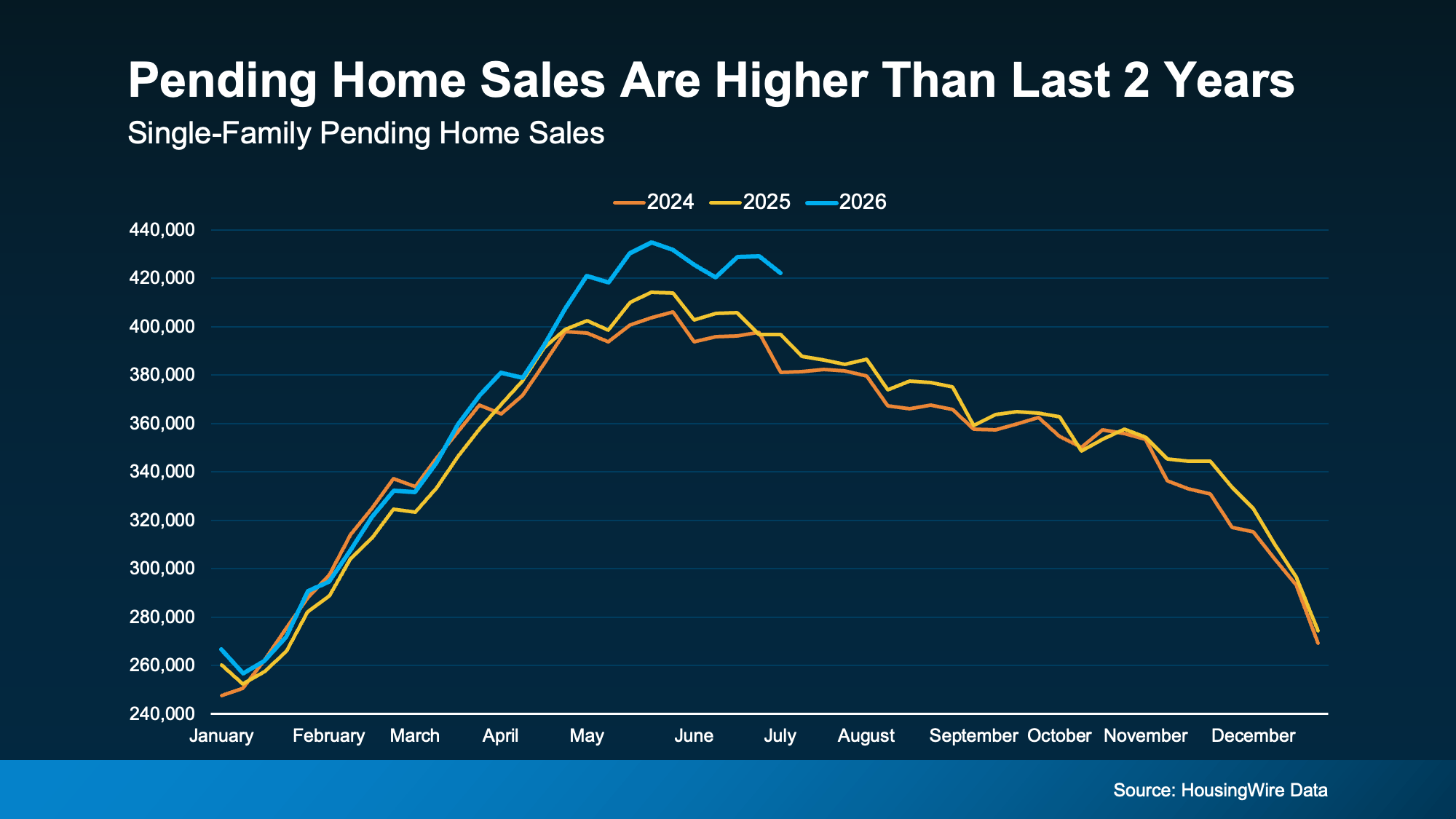
    HousingWire Data shows more homes are going under contract than at the same time the past 2 years (see graph below):

    a graph showing the sales of a home sales

    While it may come as a surprise, the numbers speak for themselves. It doesn’t mean buyers are everywhere, but it does mean they’re still active right now. And even if this ebbs and flows a bit in the weeks ahead, right now we’re still ahead of where we’ve been lately. That’s encouraging news if you’re thinking about selling because it tells us something important…

    People haven’t stopped buying homes. Serious buyers are still making moves.

    And a lot of these people are buying because they decided they can’t keep waiting. Whether it’s a growing family, a new job, retirement, or simply wanting a different home, life keeps moving… even when mortgage rates stay higher than we’d like. As Lawrence Yun, Chief Economist at the National Association of Realtors (NAR), explains:

    “A late spring buyer rush—even with mortgage rates not budging—is an indication of pent-up housing demand and consumers’ acceptance of above-6% mortgage rates as the new normal.”

    So, if you’ve been worried no one’s buying, this data should give you some confidence. Today’s buyers aren’t just casually browsing open houses on a Sunday afternoon, they’ve spent months waiting for rates to improve and now they realize they can’t wait anymore.

    That means they have a purposeand a timeline. And that’s exactly the kind of motivated buyer you want to work with.

    What This Means for Your Sale

    Does that mean every house will sell instantly? No.

    Today’s market is more balanced than it was a few years ago.  So, you can’t just price your house however you want or skip preparing it for the market.

    Now buyers have choices, and they’re willing to wait for the right home at the right price. But sellers who understand today’s market (and price and position their homes right) are still finding success. Because the idea that “no one’s buying right now” just isn’t supported by the data.

    The buyers are there.

    The opportunity is there.

    The key is having the right strategy to capture it.

    Bottom Line

    This year’s housing market may be moving slower than many of us hoped. But, buyer demand is more resilient than the headlines suggest.

    If you’re wondering whether there are enough buyers for your house, let’s connect. I’ll show you what’s happening in our local market and build a strategy that helps you take advantage of the momentum that’s already here.

  • Homes Sold with an Agent Sell for $65k more

    Homes Sold with an Agent Sell for $65k more

    Worried about making the most from your sale in today’s market? Here’s what to know.

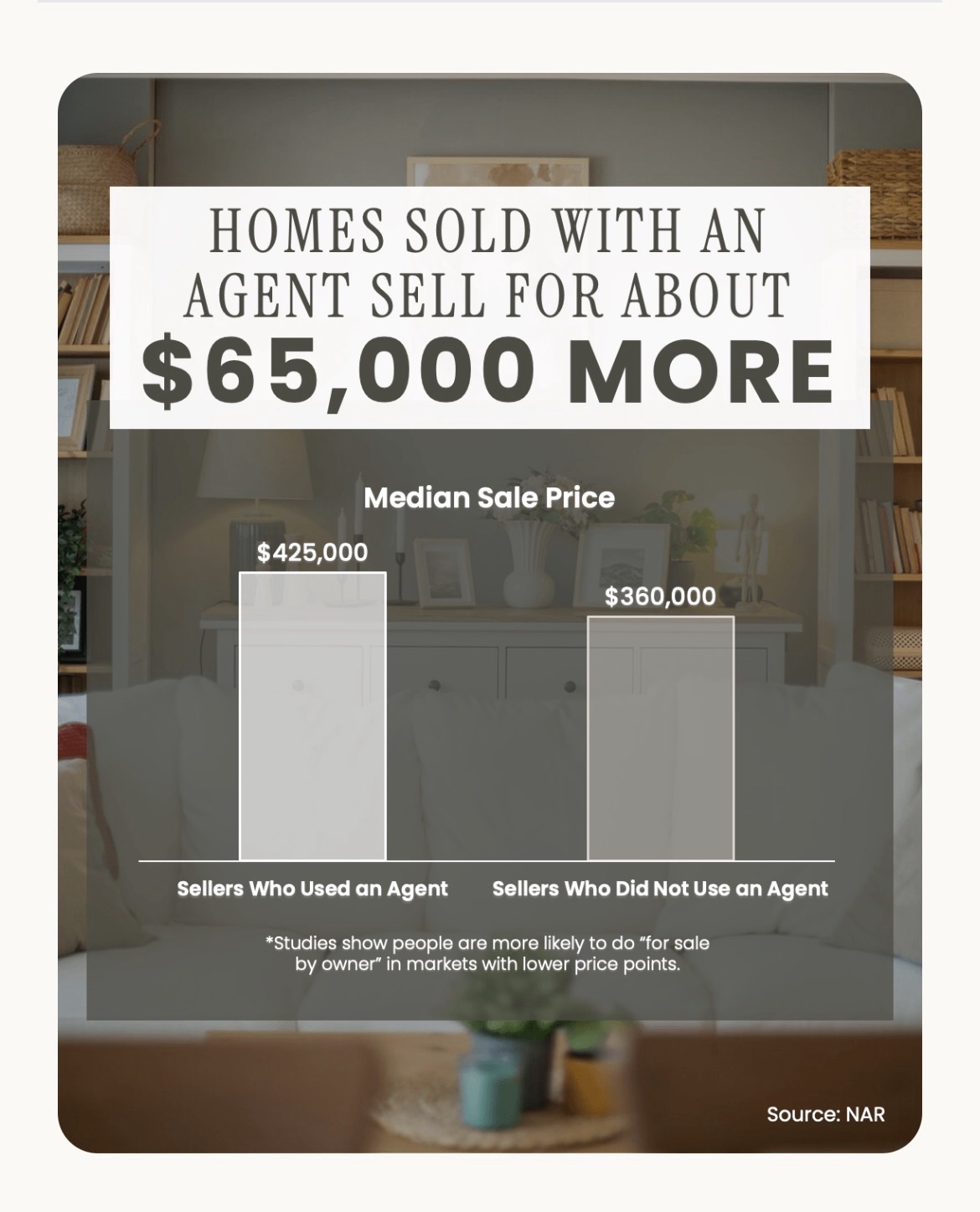
    Homes sold with an agent go for $65,000 more, on average, than homes sold without one.

    Because maximizing the profit from your sale takes insight into what buyers are willing to pay right now, how much competition you have in your area, and more.

    So, let’s connect. We’ll come up with a strategy to get you top dollar.

  • The “Take It or Leave It” Attitude Is Fading from the Market – What That Means for You

    The “Take It or Leave It” Attitude Is Fading from the Market – What That Means for You

    Negotiations are back. More buyers are asking for better deals, and more sellers are giving them. Builders are throwing in extras, too. 

    That’s why whether you’re buying or selling today, there are two terms you’ll hear a lot: concession and incentive.

    • concession is something a seller agrees to during negotiations to get a deal done.
    • An incentive is a perk a builder (or a seller) advertises upfront to attract buyers.

    Let’s run through what you need to know about both and how they could play a role in your move.

    More Sellers Are Agreeing to Concessions

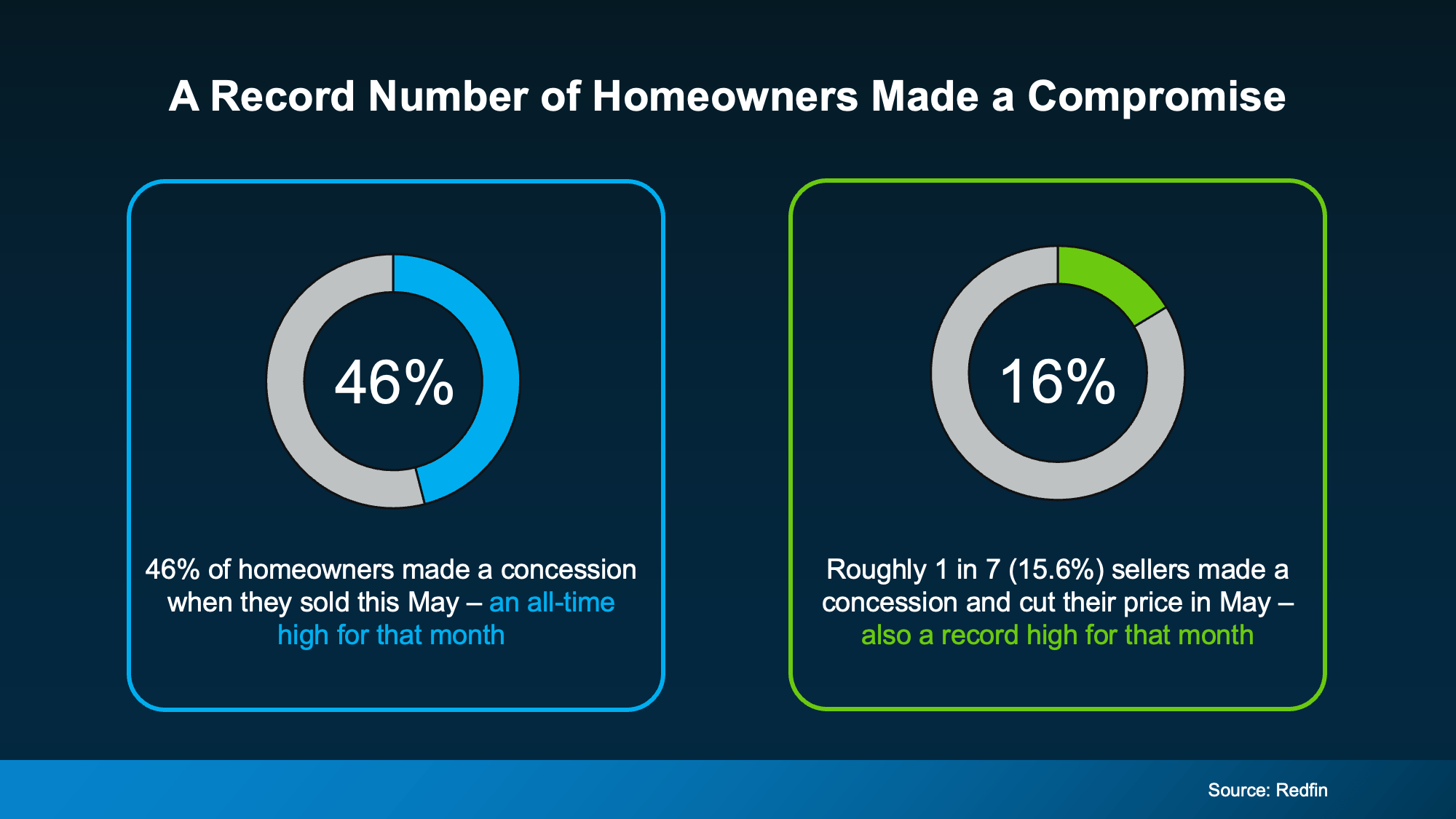
    Almost half (46%) of homeowners who sold recently gave the buyer a concession, according to RedfinThat’s the highest share on record for this time of year. And roughly 1 in 7 (16%) sellers went a step further, cutting their asking price and offering a concession on top (see chart below):

    a diagram of a homeowner's market

    So, what kind of concessions are we talking about?

    A seller might cover part of your closing costs, take care of a repair, or offer a credit that trims your upfront costs. It’s how they keep a deal on track when buyers have more options to choose from – and homeowners aren’t the only ones compromising.

    Builders Are Cutting Prices, Too

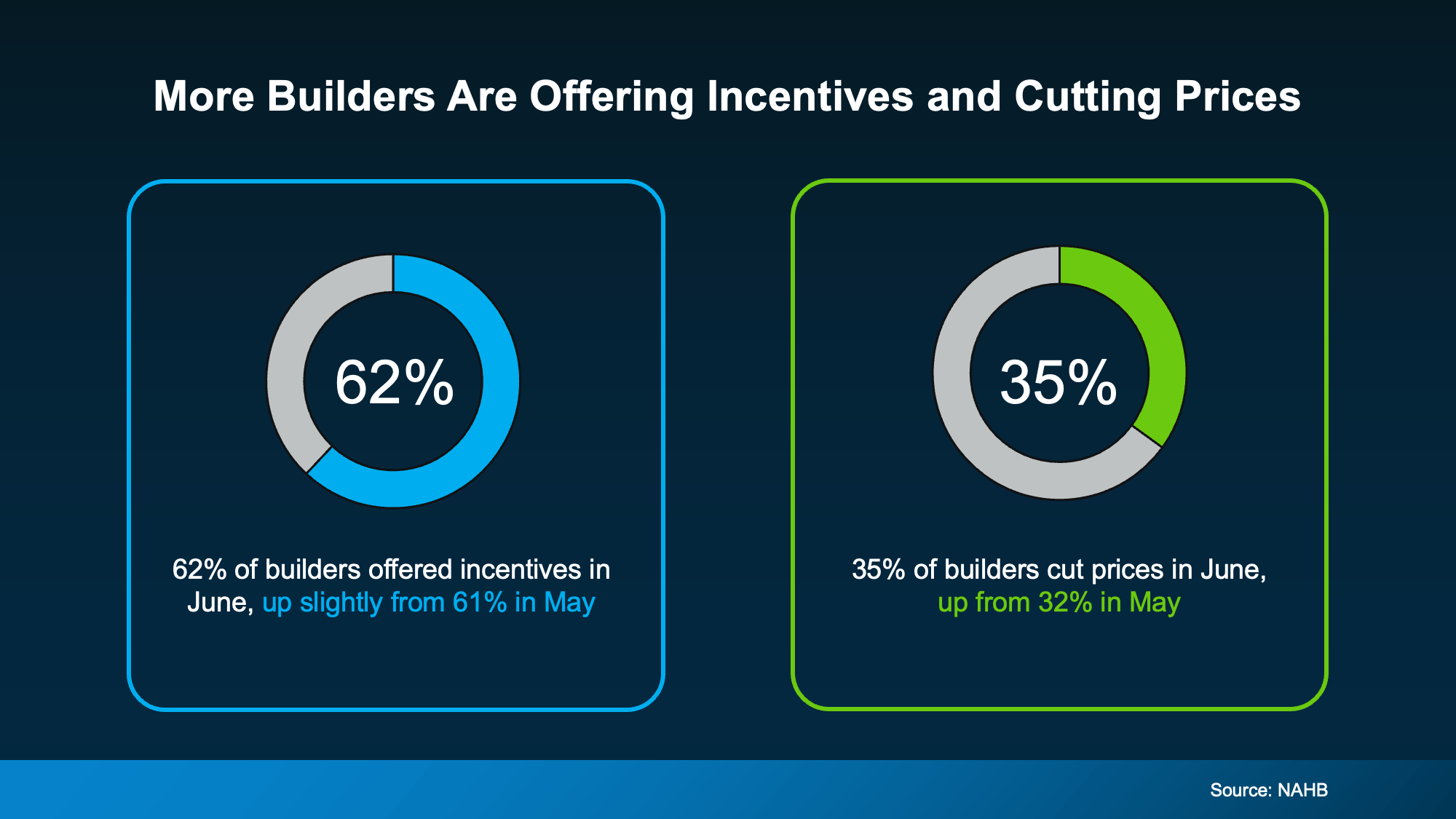
    Newly built homes are seeing the same push and pull. According to the National Association of Home Builders (NAHB), 62% of builders are offering incentives right now. And about 35% are cutting prices outright (see chart below):

    a screenshot of a graph

    Those incentives often look like:

    • Price adjustments
    • Mortgage rate buydowns
    • Free upgrades, like nicer finishes or appliances

    Danielle Hale, Chief Economist at Realtor.com, explains why:

    New construction has been one of the steadiest parts of the housing market over the past few years, but builders are clearly responding to today’s affordability pressures and higher levels of existing-home inventory.”

    Even builders, who many people think rarely negotiate, are competing on price and perks. They have been for over a year now. The same data shows this is the 15th straight month where more than 60% of builders have offered incentives to sweeten the deal. And that’s significant.

    What This Means for Your Move

    If you’re buyingthis is a good time to ask. Whether you have your eye on an existing house or a newly built home, there’s a chance the seller or builder will meet you partway on price, terms, or both.

    If you’re sellingexpect buyers to ask. Even builders of brand-new homes are making concessions more often than not right now. Holding firm on every term could mean more time on the market, or a lost sale altogether.

    Bottom Line

    Sellers and builders are both giving buyers more to work with this year. Want to know what’s realistic to expect in concessions and incentives in our market? Let’s connect.

  • What To Expect from the Housing Market in the Second Half of 2026

    What To Expect from the Housing Market in the Second Half of 2026

    If the first half of this year has left you feeling stuck, you’re not the only one. Mortgage rates stayed higher than people wanted. Affordability remained tight. And uncertainty overseas added another layer of pressure nobody saw coming.

    That’s why so many people are asking the same question: Will the second half of the year be any better for the housing market?

    While nobody has a crystal ball, there are a few encouraging signs things could start moving in a better direction. Here’s what to watch.

    Mortgage Rates Could Be Near a Turning Point 

    One of the biggest reasons mortgage rates haven’t come down yet is inflation. And higher energy prices and uncertainty overseas are at least part of the reason inflation is still elevated. The encouraging news?

    Oil prices have already started coming back down.

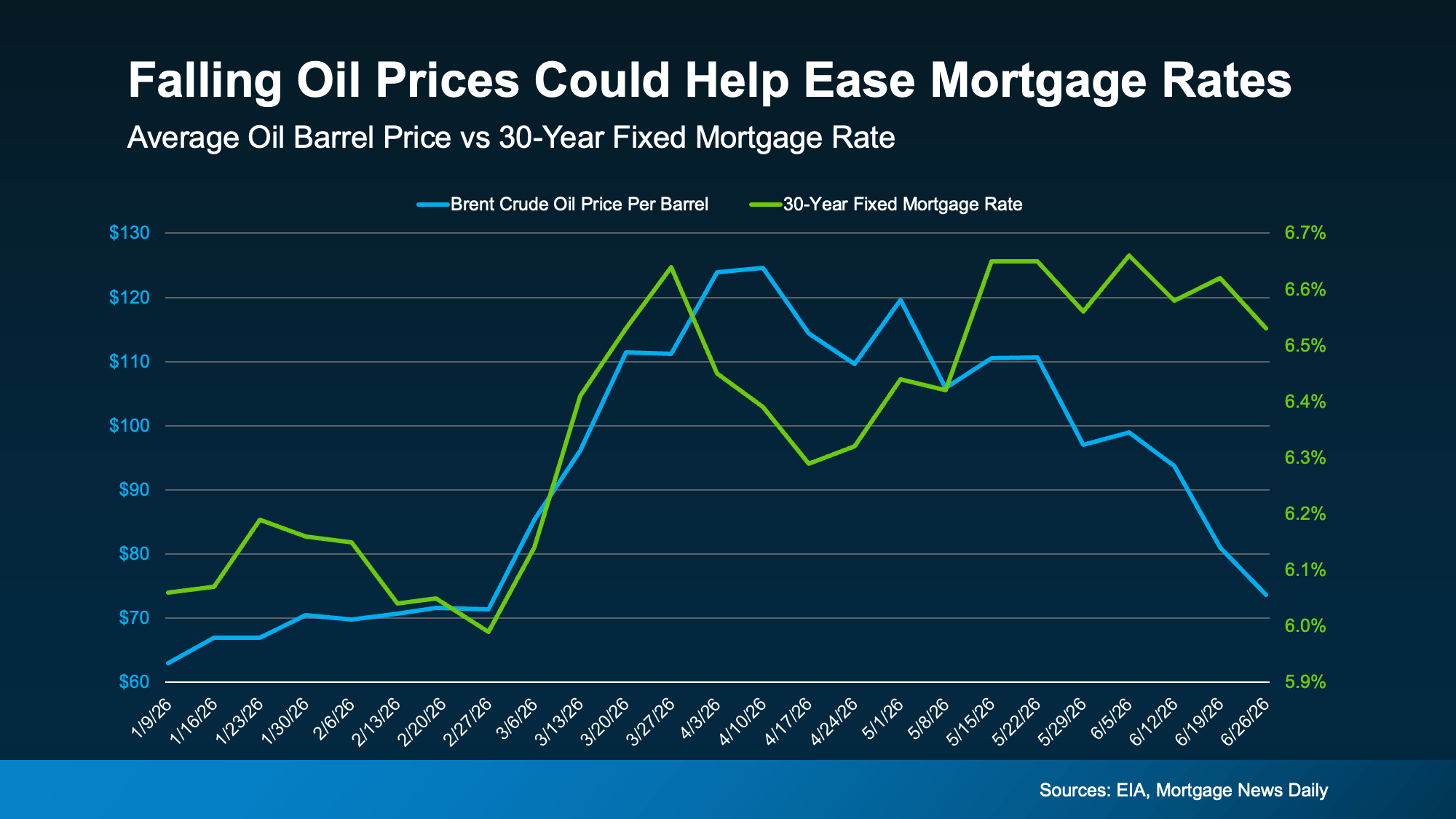
    That may not sound like it has much to do with buying a home. But historically, mortgage rates and oil prices tend to move in the same direction.

    Take a look at the graph below. Generally, they rise and fall together. Both went up in February when the conflict began. While there’s been some volatility lately, experts at the U.S. Energy Information Administration (EIA) say oil prices are forecast to come down. And since oil prices have been on an overall downward trend lately, mortgage rates could come down too:

    a graph showing the price of a mortgage rate

    It’s too soon to say exactly when that will happen (or by how much they’ll fall), but if energy prices go down, inflation cools off, and tensions overseas ease, mortgage rates could come down in the second half of the year.

    And that’s good news for anyone thinking about moving. The first half of the year tested everyone’s patience. The second half may finally reward it.

    Home Prices Could Pick Back Up

    A lot of people want home prices to fall too. But that’s not what most forecasts show.

    While price trends are going to vary by area, and some places are seeing mild declines, experts still expect home prices to net positive this year at the national level.

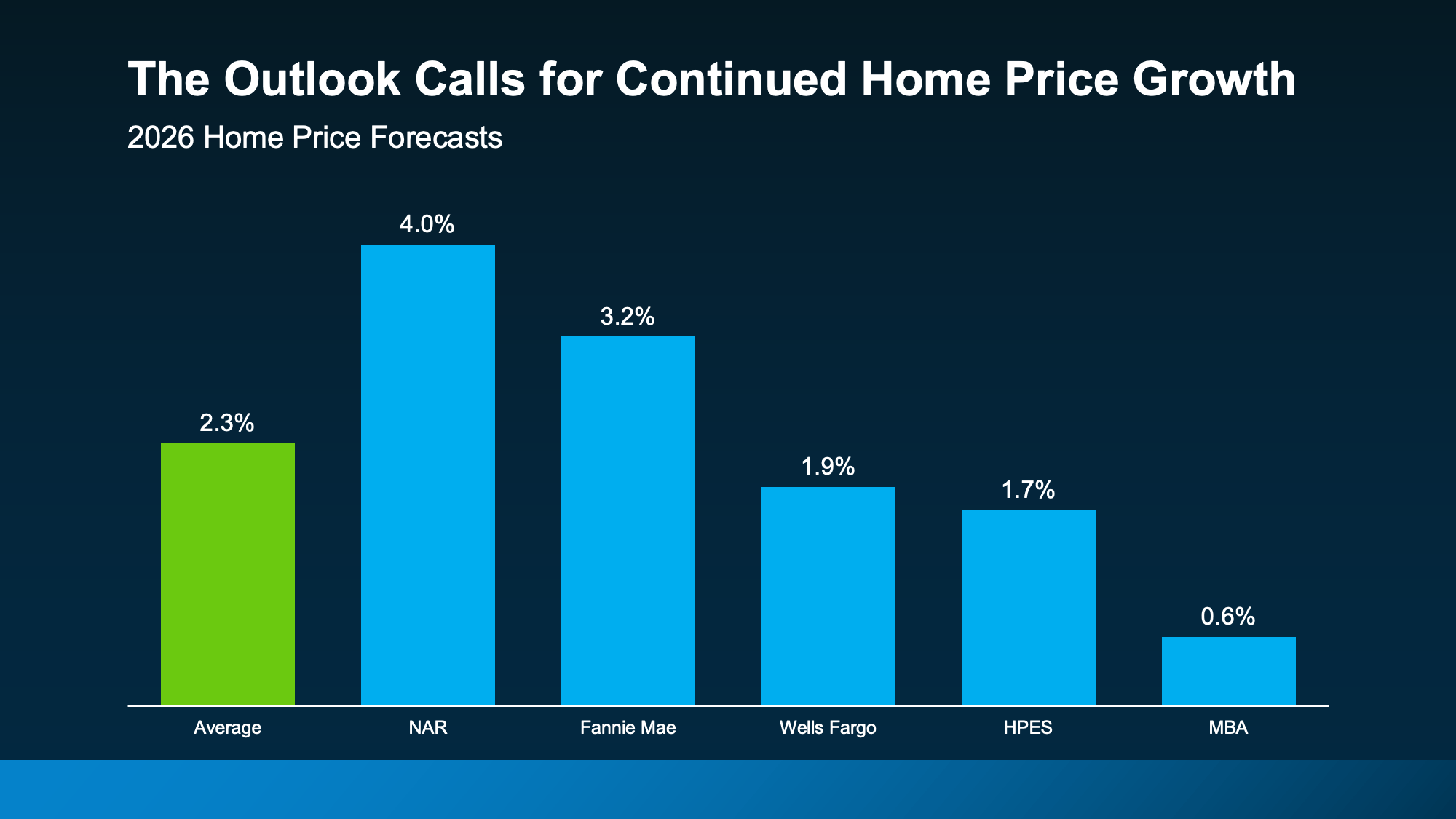
    In fact, they’re projecting prices will rise by an average of 2.3% in 2026 (see graph below):

    a graph of blue rectangular objects

    What does that mean for you? Right now, Federal Housing Finance Agency (FHFA)data shows prices are up about 1.7% nationally year-over-year. The average forecast for all of 2026? 2.3%.

    Based on those projections, home price growth would have to pick up a bit during the second half of the year. Nothing dramatic, just enough to finish the year around that projected 2.3% gain.

    Here’s why that’s possible.

    The number of homes for sale has grown, but that growth may be starting to slow down. And if rates improve, more buyers could jump back into the market. More buyers competing could put modest upward pressure on prices, especially if inventory’s not growing as fast.

    That’s why buyers shouldn’t assume waiting will guarantee a lower price later. And for sellers, that’s great news if you’ve been worried about your home’s value.

    More Homes Are Expected To Sell

    If you’ve been wondering why the housing market has felt quieter lately, you’re not imagining it. Home sales have been slower than many experts expected. But that doesn’t mean people have stopped wanting to move.

    A lot of people still want or need to make a change. They’ve just been waiting for more certainty, better affordability, or a clearer read on where the market is headed. And early signs show that may be on the horizon.

    If rates ease and confidence improves, more people may finally move. As Odeta Kushi, Deputy Chief Economist at First American, explains:

    Overall, we expect pent-up demand to continue emerging gradually. But the pace of recovery will vary significantly across markets and will depend on the path of rates, labor market conditions and inventory growth.”

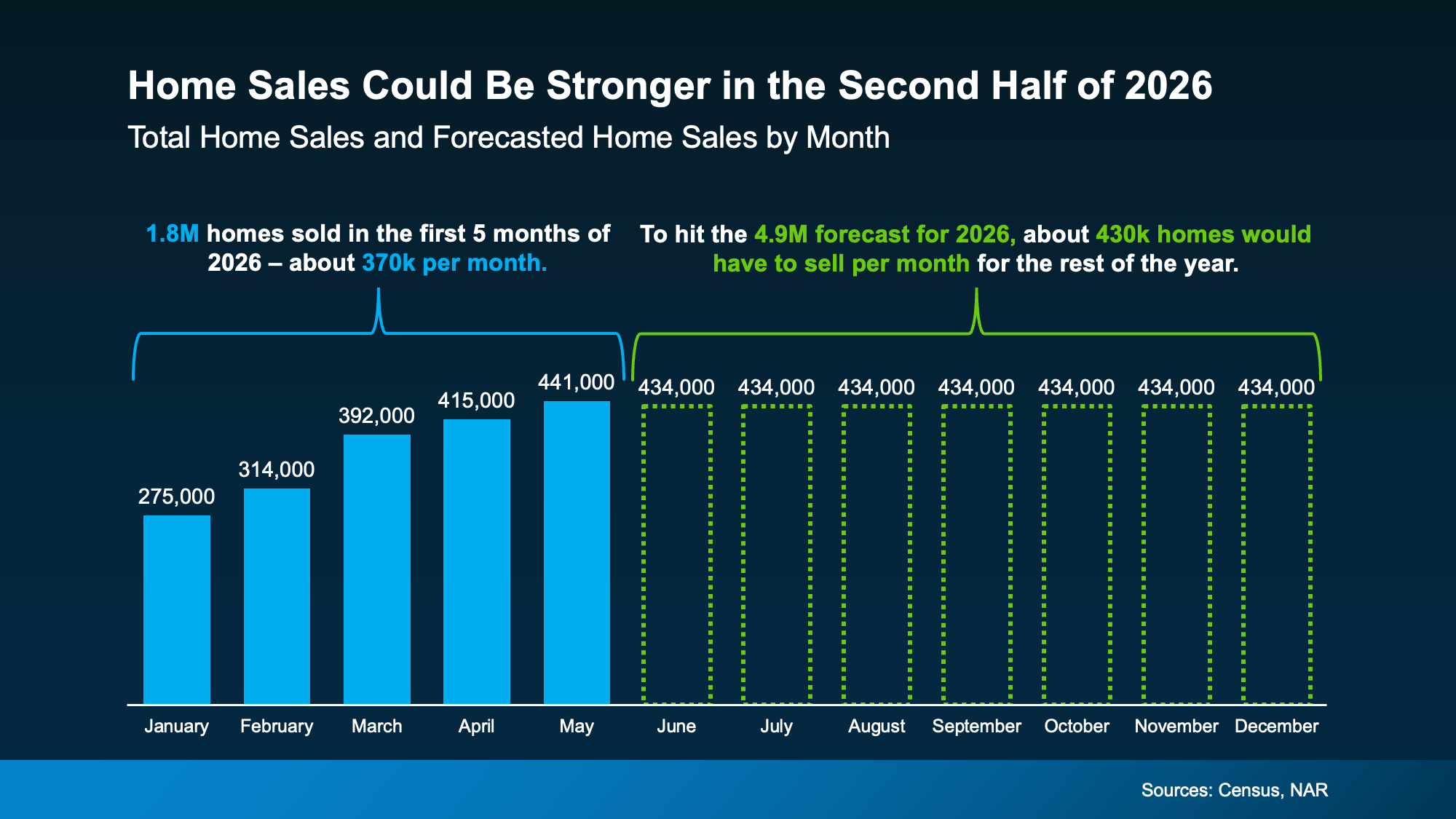
    Based on the latest forecasts, to hit the number of sales expected this year, here’s what would have to happen. The second half of the year would need to outperform the first in sales (see graph below):

    a graph of sales and statistics

    In fact, each month for the rest of 2026 would have to come close to matching the best month we’ve had so far this year (May). That’s a sign the experts are calling for more momentum headed into the second half.

    More people will finally make their move happen – and you’ve got the chance to be one of them.

    Bottom Line

    The second half of the year probably won’t be perfect. But it could be better.

    Mortgage rates may ease. Home sales could pick up. And prices are expected to continue rising at a healthier, more sustainable pace. If you’ve been waiting for signs of progress, this is it.

    If you want to understand what these forecasts mean for your plans and what’s happening in our local market, let’s connect.

  • Student Loans Are Back in the News. Don’t Let It Put Your Homeownership Plans on Hold.

    Student Loans Are Back in the News. Don’t Let It Put Your Homeownership Plans on Hold.

    Student loans are back in the spotlight. And whether you’ve been following the headlines closely or just catching bits and pieces here and there, there’s a good chance they’ve been on your mind lately.

    And if you’re questioning whether you have to hit pause on your plans to buy a home, here’s the thing you have to remember:

    Having student loans doesn’t automatically mean buying a home has to wait.

    The Biggest Myth About Student Loans and Buying a Home

    One of the most common misconceptions among first-time buyers is that they have to pay off their student loans before they can qualify for a mortgage. But in most cases, that’s just not true.

    As an article from Redfin explains, student loans usually get evaluated the same way other debts do, like credit cards or car payments:

    “Yes, you can get a mortgage with student loan debt. Lenders primarily assess your debt-to-income (DTI) ratio, which compares your monthly debt payments, including student loans, to your gross monthly income. Having student debt doesn’t automatically disqualify you if your DTI is within acceptable limits.”

    So having that loan on your credit report isn’t some special red flag that immediately disqualifies you.

    Instead, lenders look at your overall financial situation, including your income, credit history, and more. Student loans are one piece of that puzzle, but they’re not the entire picture.

    You’re in Better Company Than You Think

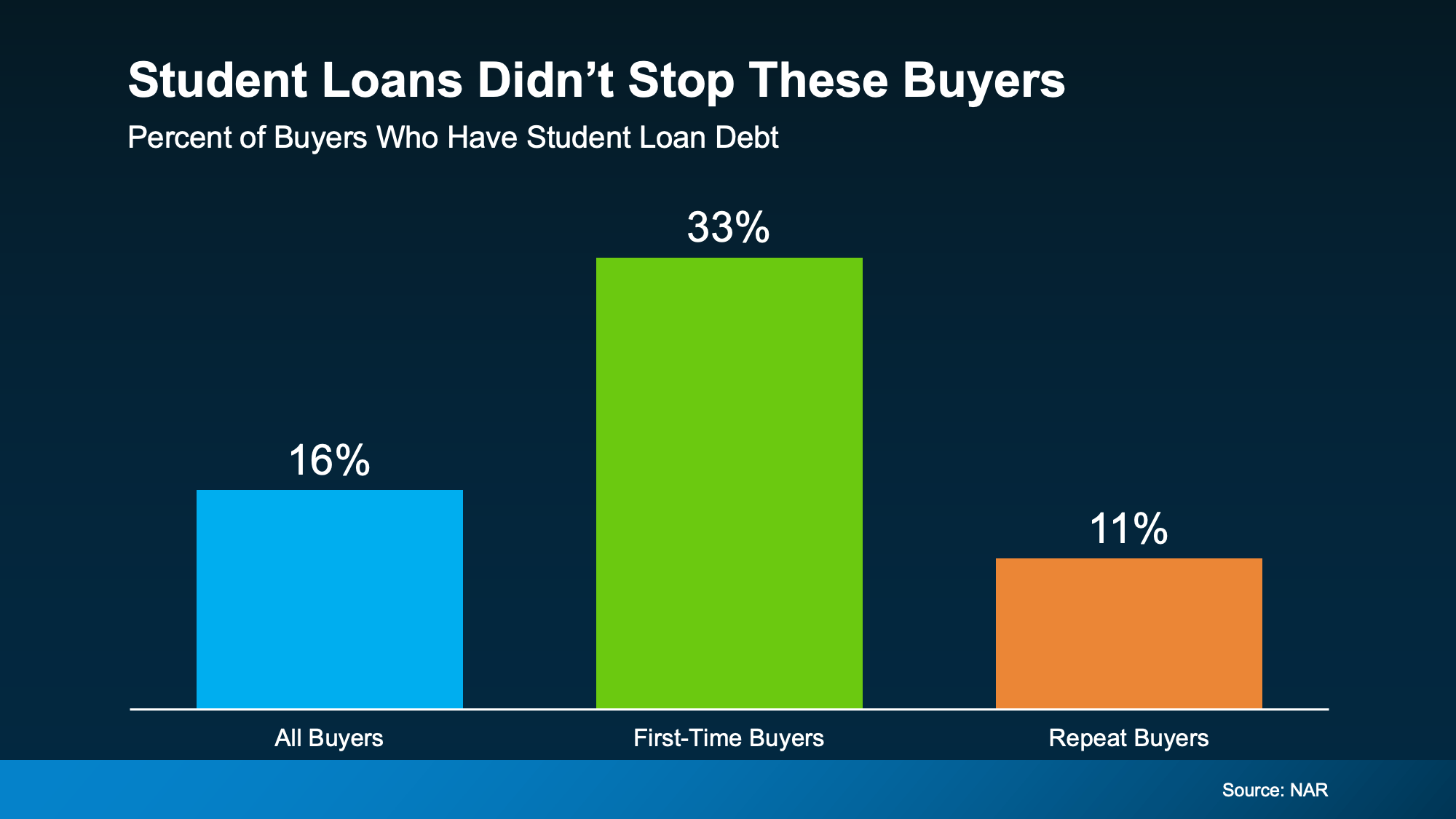
    Just to really drive this home, here’s a stat from the National Association of Realtors (NAR) that proves you can have student debt and still buy a home. Their research shows 33% of first-time homebuyers still had student loan debt.

    a graph of a student loan debt

    That’s 1 out of every 3 first-time buyers. The median amount they owed? $30,400.

    Let that reassure you that people are buying homes with student debt every day. And carrying student loans doesn’t automatically put homeownership out of reach.

    Don’t Count Yourself Out Before You Even Try

    At the end of the day, here’s where a lot of buyers trip themselves up. They assume the worst and never even check what they could actually qualify for. But your situation is more unique than a blanket “no.”

    If your income is steady and the rest of your finances are in decent shape, buying a home could be more realistic than you think. The only way to know for sure is to actually run the numbers with someone who does this for a living.

    You may discover you’re closer to buying than you think.

    Bottom Line

    Student loans don’t have to be the thing standing between you and owning a home. If you’ve been putting off your homebuying plans because of that debt, talk to a lender about your options. It may not be the barrier you think it is.

  • First-Time Buyers Hit Their Highest Share Since 2020

    First-Time Buyers Hit Their Highest Share Since 2020

    This may come as a surprise, but first-time buyers are making a bit of a comeback.

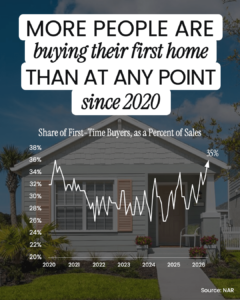
    Data shows first-time buyers made up 35% of everyone buying a home in May – their highest share of the market since 2020.

    That’s up from just 30% a year ago. And if you’re wondering how that’s possible when affordability is so tight right now, it comes down to this: more choices.

    With more homes for sale, buyers have more opportunity to find a home that works for their budget.

    So, if you’re trying to buy your first place, don’t count yourself out too soon. It may feel tough, but DM me and let’s see what’s possible.

    Your peers are doing it, so maybe there’s a way for you to make it happen too.

    #FirstTimeHomebuyer #HomebuyingTips #KeepingCurrentMatters

  • What Buying or Selling a Home Gives Back to Your Community

    Buying or selling a home is a big financial decision. And right now, it feels even bigger. Inflation is high, costs are high, and you want to be sure the timing is right before you make your move.

    But if you do decide to go for it, whether you’re buying or selling, here’s something reassuring to hold onto. Not only does your move change your own life, but it also gives your whole community a boost.

    Real estate is a huge part of the economy. In 2025, it added up to about $5.6 trillion, according to the National Association of Realtors (NAR). A good share of that comes from everyday people buying and selling homes, just like you.

    Your Move Puts Real Money Into the Local Economy

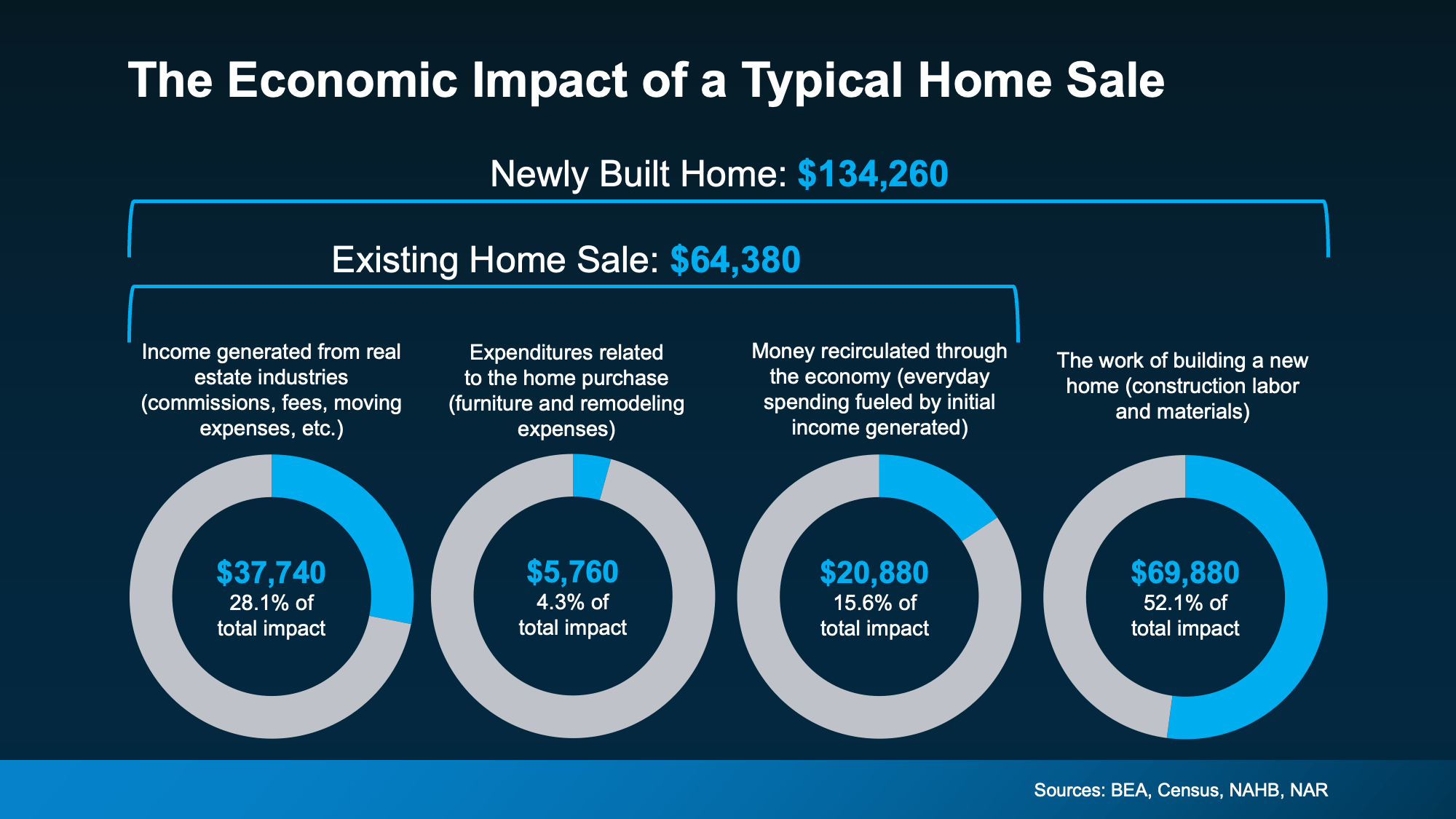
    Every sale sends money flowing through your area. NAR data shows that buying an existing home (one that’s already been lived in) adds about $64,000 to the local economy. Buy a newly built home, and that number climbs to more than $134,000 (see graph below):

    a diagram of a home sale

    Over half of that comes from the work of building the home itself. The rest flows to real estate services, like agent and lender fees, plus what you spend settling in afterward, on things like furniture and remodeling.

    And the money doesn’t stop there. As local businesses earn it, they spend it again in your area, so a single sale ripples further than the sale price alone.

    One Sale Keeps a Lot of People Working

    Behind every sale is a whole network of people doing their jobs. Contractors, lenders, inspectors, movers, and more. When you buy or sell, you help keep them busy. Lawrence Yun, Chief Economist at NAR, puts it this way:

    Increased home sales mean more economic activity — lawn care, furniture purchases, moving services, mortgage originations and other related business activities all get a boost.

    So, your move supports your neighbors’ livelihoods, too. The deal that gets you into your next home also helps a local crew make payroll. In a year when every paycheck counts, that’s no small thing.

    Your Local Impact May Be Even Bigger

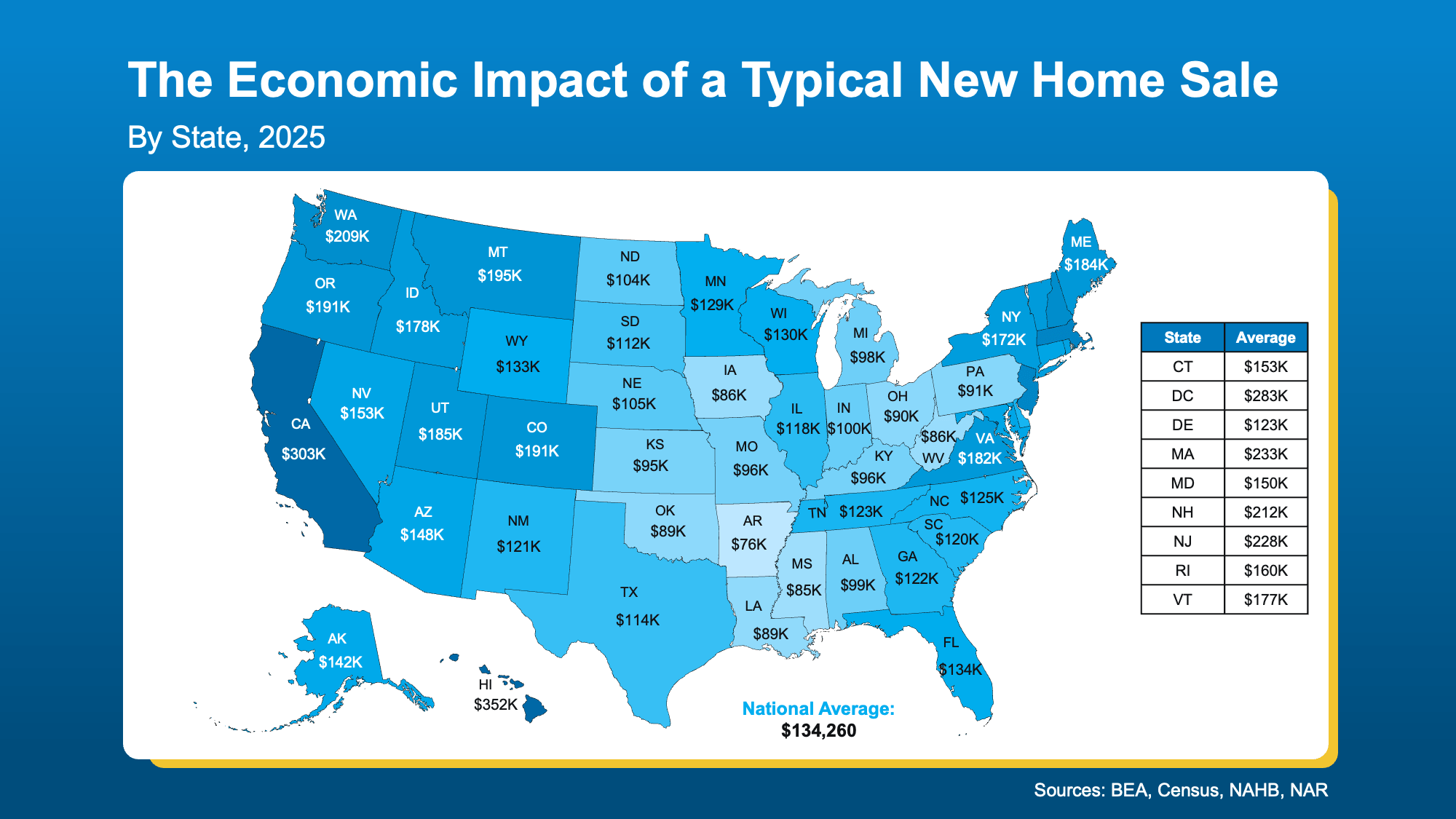
    What your move financially adds to your community depends a lot on where you live. To help you see how it can vary, here’s a look at the impact of a typical newly built home sale by state.

    The national average for a newly built home is about $134,000, but some states see far more (see map below):

    a map of the united states

    In California, a single sale adds more than $300,000 to the local economy. In Hawaii, it’s over $350,000. Even in the most affordable states, the number lands in the tens of thousands.

    Want to know what a move would mean where you live? A local agent can show you the figure close to home.

    Bottom Line

    Moving is both a personal milestone and an investment in your community. So, if the time is right for you, let’s connect. You’ll make a difference for more people than you know.

  • Hancock Annual Halloween Parade

    Hancock Annual Halloween Parade

    We had a wonderful crowd stop by to enjoy the view in front of our Trail Town Office for the annual Hancock Halloween Parade.